
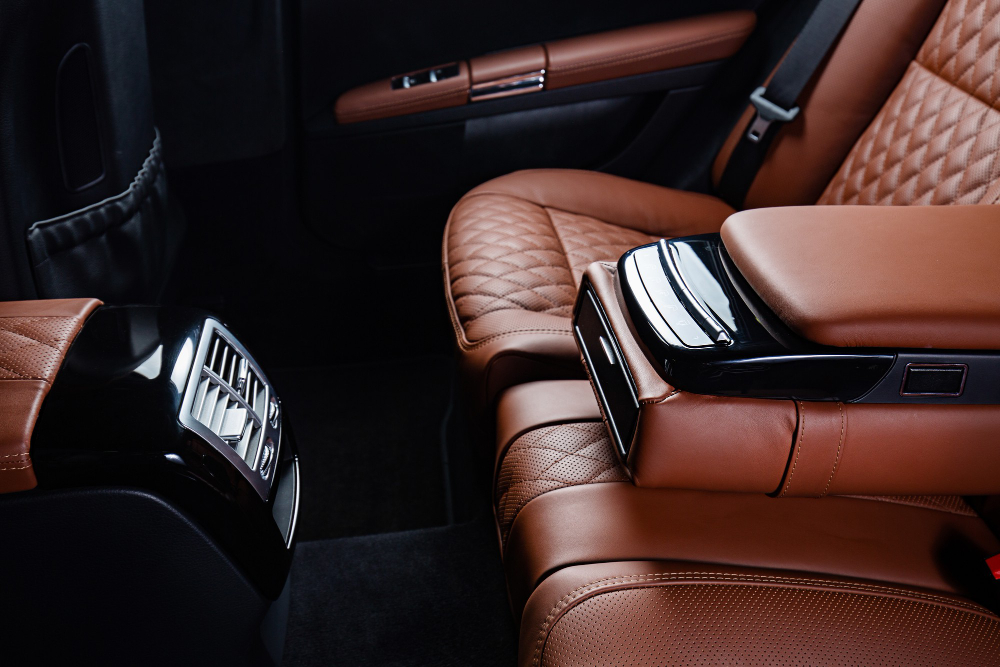
Luxury car tax on a dealer's trading stock is usually deferred at the purchase, through a quoted ABN. It falls due on the sale that takes the car out of the trade.
For the 2026-27 year the ATO's threshold is $80,809, or $91,661 for a fuel-efficient car. The rate is 33 per cent, and dealers report the tax on their BAS.
A quote given wrongly, a car put to the wrong use, or a near-new resale with no record of earlier tax can each leave a dealer owing LCT.
Dealer2Dealer Auction is a dealer-only online auction platform for licensed Australian motor dealers.
The 30-cent rule above the luxury car tax threshold
The ATO's formula is the LCT value, less the threshold, multiplied by 10/11 and then by 33 per cent. LCT value is the price excluding LCT and other Australian taxes and charges, though GST and customs duty stay in.
The two multipliers combine to 30 cents of tax for every dollar of LCT value above the threshold, which makes a desk estimate quick.
The 2025-26 thresholds were $80,567 and $91,387. Pricing off last year's $80,567 overstates the tax on a standard car by $72.60.
The fuel-efficient threshold now has a much stricter test. The ATO's definitions page puts the cut-off at a combined rating of 3.5 litres per 100 kilometres from 1 July 2025, down from 7 litres.
A hybrid SUV rated at 5 litres is therefore taxed against the lower $80,809 threshold. At any LCT value above $91,661, that costs $3,255.60 more than the fuel-efficient threshold would have.
A separate $120,000 threshold for zero-emissions cars is due from 1 July 2027, subject to legislation.
Who pays luxury car tax?
The ATO says the tax is "paid by businesses that sell or import luxury cars (dealers)". It applies when a business registered, or required to be registered, for GST sells a luxury car in the course of its business.
Each stage of a supply chain counts as a separate sale. Without a quote, a dealer selling to another dealer would owe the tax on that sale too.
The tax goes on the BAS at label 1E for the period of the sale, with adjustments to earlier periods at 1F.
ABN quotes and the trading-stock purpose
A GST-registered buyer may be able to defer the tax by quoting its ABN, but only for a quotable purpose. For a yard, that purpose is holding the car as trading stock, other than for hire or lease.
The quote has to be given at or before the purchase. Personal use, salary packaging, promotion and use as a capital asset all rule quoting out, even if the car is to be sold later.
The selling dealer carries risk of its own: the ATO's compliance material describes a dealer-to-dealer sale under quote that was treated as a sham.
The ATO's quoting page sets the approved form, and its compliance material adds a check for the seller:
- The words "I hereby quote Australian business number", the buyer's ABN, then "in relation to the supply of the luxury car"
- The buyer's business name
- The name and signature of the person authorised to quote, and the date
- The quote written on, or attached to, a document that identifies the car
- The seller's check: the quoted ABN is valid and registered for GST, and a copy of the buyer's licence is kept
A periodic quote covers purchases from one supplier for 12 months or less, though not imports.
The ATO warns that failing to tell a supplier a car is for a non-quotable use is a criminal offence.
Change of use on quoted stock
A quote only defers the tax. If the car is later used for something other than a quotable purpose, the Act creates an increasing adjustment and the LCT becomes payable.
The ATO has named the patterns it looks for: "extended" test drives, personal use, and cars informally leased or sold. Those uses can turn a stock unit into a taxed car.
The High Court looked at display use in Automotive Invest v Commissioner of Taxation in 2024. By three to two, it held that showing quoted cars in a museum was a means to using them as trading stock. The ruling dealt with display, and demonstrator use remains a separate question.
Time on the yard can make a weekend drive more tempting, which turns LCT into one more cost of aged stock on a luxury unit.
Luxury car tax on used cars
On a used car, the first question is age. No LCT applies to a car that was not imported and was manufactured more than two years before the sale.
For an imported car, the two years run from the import date instead.
A car no more than two years old may still attract the tax. Any LCT already paid on an earlier sale is deducted, but a fall in value earns no credit.
A made-up resale shows the credit at work. A petrol SUV imported and sold new in the same month carried $8,829.90 of tax on an LCT value of $110,000, against the 2025-26 threshold.
Twelve months later a dealer retails it at an LCT value of $92,000. Against the 2026-27 threshold the tax on that sale is $3,357.30, less the $8,829.90 already paid, so nothing is due.
That result depends on evidence. The ATO points to invoices or a previous owner's written statement as proof of the earlier tax. Without them, the $3,357.30 could fall due.
When buying near-new luxury units through used car auctions, request that record from the seller before the auction closes.
FAQ
When do you pay luxury car tax?
In the BAS covering the period of the taxable sale. For a car bought under quote, a later change of use is reported in the period that change happens.
Do you pay luxury car tax on used cars bought from private sellers?
There is no LCT on a sale by a private owner, because the tax applies to sales a GST-registered business makes in the course of business. A dealer's later retail sale is another matter if the car is no more than two years old.
Is demonstrator use a quotable purpose for LCT?
Although the ATO's quoting page lists trading stock, manufacturer research and GST-free export as quotable purposes, it names no demonstrator exception. Confirm the treatment with a tax adviser before quoting.
Are electric cars getting their own luxury car tax threshold?
A $120,000 zero-emissions threshold is set out in an exchange of letters under the Australia-EU trade agreement. Its start still depends on legislation passing.
Luxury stock with its LCT in order
Two dates are worth writing on every luxury unit's stock card: the quote date and the import date.
With both recorded, the 30-cent rule handles the LCT line on the buying sheet.
Register with Dealer2Dealer Auction to run that rule over the next luxury car you price.