
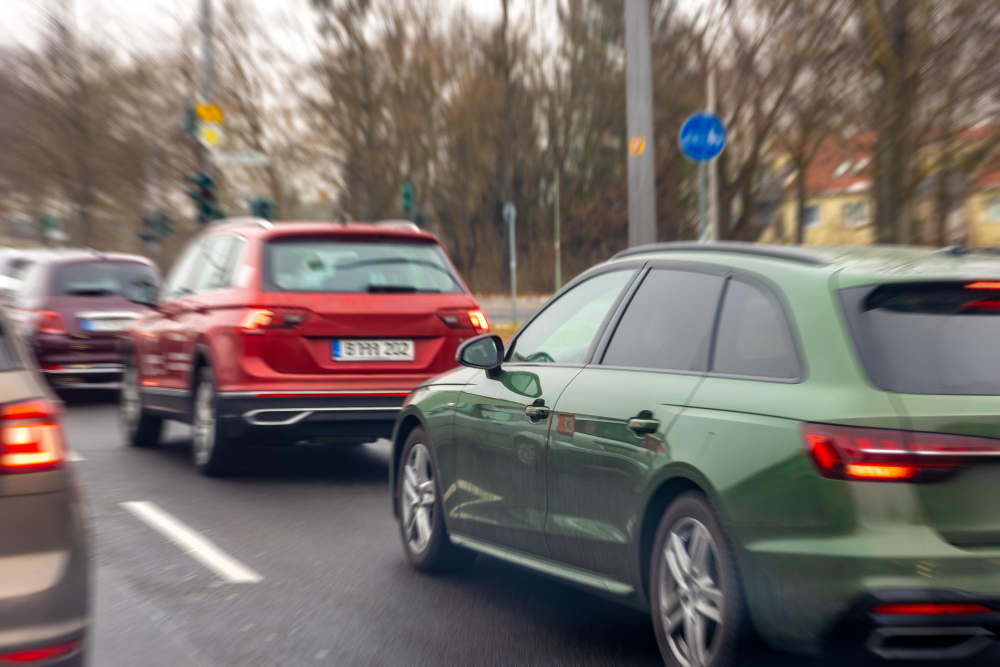
Unregistered stock moves through every yard in the country. Cars land from a trade, an interstate buy or a manufacturer run, and each one still has to get somewhere.
Trade plates are how most yards handle it. The plate goes on, the car goes to the workshop or the buyer, and nobody looks harder at the paperwork.
The catch is that a plate is a permission for a trip, not a registration belonging to the car. Each state writes its own version of which trips count.
Dealer2Dealer Auction is a dealer-only online auction platform for licensed Australian motor dealers. What follows is the plate side of the job, state by state, and the point where a plate stops being the answer.
What trade plates actually cover
The same idea sits underneath every state's conditions. The plate authorises a journey for a trade reason, and the reason has to be on the list.
Transport for NSW allows use for purposes connected with the manufacture or repair of a vehicle, or dealing in it. Delivery to the person who acquired the vehicle is on the list, so is a direct run to a service centre for registration.
VicRoads takes a different route to a similar place. Its permitted uses are set out by holder type, so a Licensed Motor Car Trader, a licensed vehicle tester and a fleet owner do not all get the same list.
Transport WA lists a prospective buyer's test drive at up to 24 hours, and attendance at an examination centre.
The car is not the unit being licensed. The trip is.
Who can hold trade plates, and what each state calls them
Names differ before anything else does. New South Wales issues trader's plates, Victoria and Western Australia issue trade plates, and Queensland's Transport and Main Roads form covers dealer and trailer trade plates.
In New South Wales the eligible holders are motor dealers, manufacturers, repairers and organisations directly connected to the motor trade.
Narrower in one respect and wider in another, Victoria admits Licensed Motor Car Traders and licensed vehicle testers. Businesses that modify, repair or transport vehicles before first registration qualify, and so do fleet owners running 50 or more vehicles.
Western Australia requires an ABN, and extends to transporters contracting to licensed dealers.
South Australia does something the others do not. Plates are issued against a recorded vehicle category. The categories on offer include light vehicles up to 4,500 kg, heavy vehicles above it, motorbikes and trailers.
A plate does not stand in for a trade licence. Eligibility usually starts from the trade you are licensed or registered to run, so the motor dealer licence rules come first.
Where the permission stops at the state line
This is the part that catches buyers of interstate stock. The plate's home state decides how far it reaches, and the states disagree.
The NSW conditions of use say vehicles displaying NSW trader's plates may be used in all other Australian jurisdictions, on those same conditions.
Not so in Western Australia. Transport WA's published advice is that WA trade plates are valid only within Western Australia.
Between those two sits Victoria, where VicRoads tells holders to check with the relevant authorities before using Victorian trade plates in another state.
A Perth buyer collecting a car in Adelaide cannot lean on the assumption a Sydney buyer can. Where the plate cannot travel, the fallback is generally a permit from the state the car sits in, or a carrier. Route-by-route freight numbers sit in interstate car transport cost.
What a trade plate will not do
The prohibition lists are where the fines live. New South Wales rules out carrying passengers or loads outside limited exceptions, driving a written-off vehicle and lending the plates to anyone else. Cab chassis vehicles are kept to daylight hours.
Loads are allowed in Victoria only in listed cases, such as demonstrating carrying capacity to a buyer.
South Australia keeps it blunt. Using a trade plate on a category of vehicle that is not recorded on your certificate is an offence.
A breach becomes expensive when a driver treats the plate as a spare rego.
The record behind the plate
The record conditions sit with the plate, and New South Wales spells its version out. Traders must enter particulars in ink on a record in a form approved by Transport for NSW. The record is kept for at least six months, stored securely and produced when asked.
A dated line naming the vehicle, the driver and the purpose is the cheapest audit defence a yard has.
Before the keys move:
- The reason for the trip, checked against your state's approved purposes
- The plate category on your certificate, and whether the vehicle sits under or over 4,500 kg
- Written authority for any driver who is not you, including a buyer on a test drive
- Whether the run crosses a border, and what the plate's home state allows
- The record entry: date, vehicle, driver, purpose
- Cover for the trip, since a plate and an insurance policy are different things
The trip you never have to justify
Every plate question starts with a journey. Remove the journey and the permission question goes with it.
That matters on the wholesale side, where the seller is the one arranging the trip. Dealer2Dealer Auction lists vehicles from the seller's own yard, and the vehicle does not travel to an auction site.
The buyer still has a leg to organise, and it carries the plate or permit decision. What the seller drops is the outbound run, along with every condition attached to it.
FAQ
How do you get trade plates?
There is no national application. Each state transport agency runs its own process, and the forms generally ask what trade you are in and why you need plates. Fees differ and schedules move: Western Australia's starts at an annual $46.90 dealer trade plate fee plus a $500 deposit, and a Victorian plate runs a year before renewal.
Can trade plates be used interstate?
Not automatically. NSW conditions permit use in other jurisdictions on the same terms, while Western Australia limits its trade plates to Western Australia.
Are trade plates and dealer plates the same thing?
Different names are used for much the same permission. Trader's plates in New South Wales, trade plates in Victoria and Western Australia and dealer trade plates in Queensland all sit on unregistered vehicles moved for trade.
What records do trade plates require?
New South Wales requires particulars entered in ink on an approved record, kept for at least six months and produced on request. Other states set their own conditions, so check the ones attached to your plates.
A shorter trip for the same car
Plate rules are administrative until the day they are not.
The larger saving sits earlier than the plate. A kilometre a wholesale car never travels is a permission nobody checks and a freight bill nobody pays.
A car that sells from its own yard never makes that first trip. Register with Dealer2Dealer Auction before the next unregistered unit needs a run. Buying costs nothing, listing costs a seller nothing, and the one flat success fee falls to the seller only when the vehicle sells.